


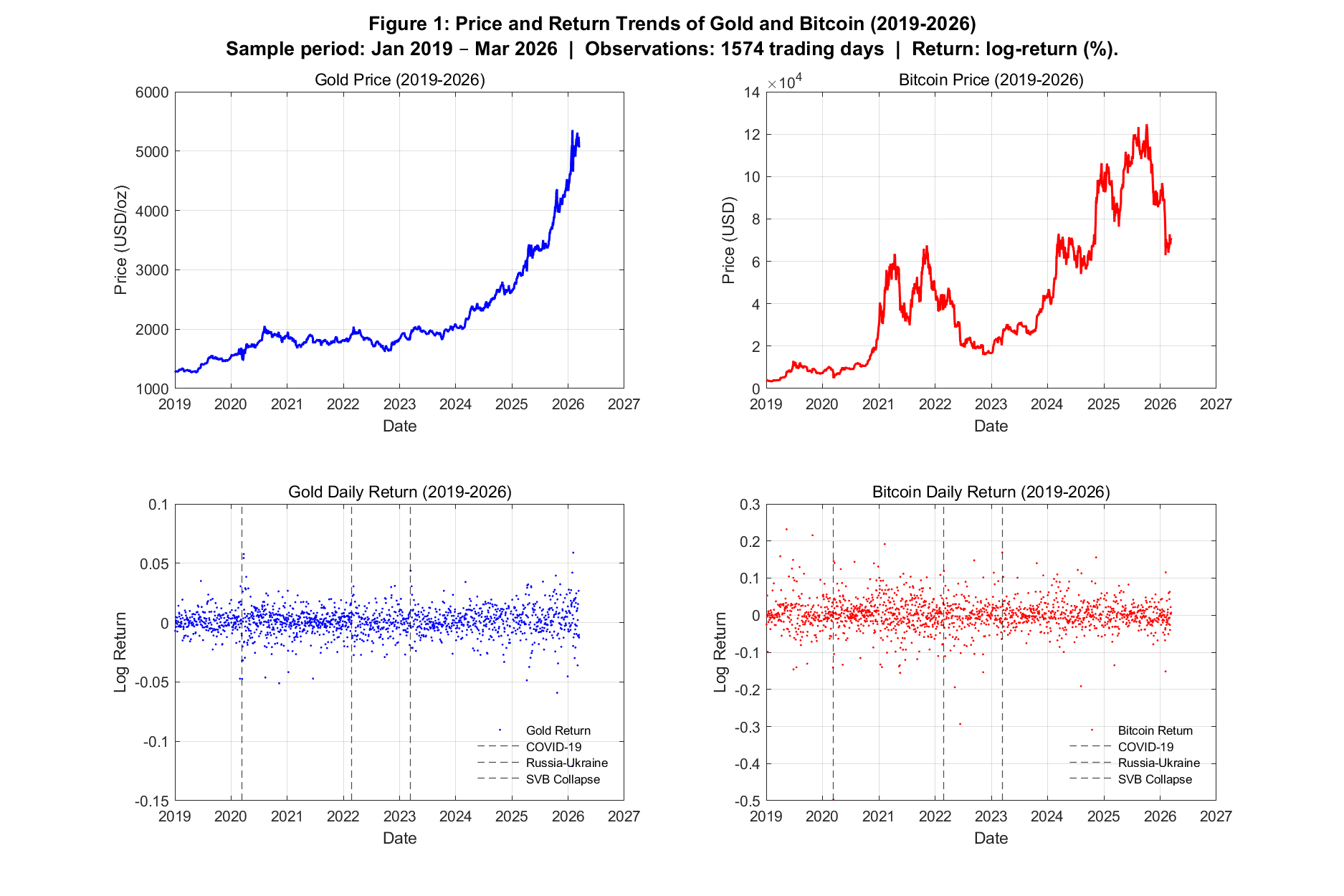
This study is based on the event study analysis method with the use of gold as safe haven asset. The observation period is from 2019 to 2026. Five representative global crisis events were chosen during this time. The primary objective is to test the hypothesis whether there was a statistically significant deviation in the return of Bitcoin on gold. The events chosen include public health emergencies, geopolitical tensions, monetary policy hike, and systemic financial risks. To this end, this paper created the daily log return difference of Bitcoin and gold. This study computed abnormal return differences and their cumulations in different event windows using this index. To provide greater robustness to the conclusions, this study performed additional robustness checks where the length of the estimation window was varied as well as the length of the event window. All five crisis events had Cumulative Abnormal Differences (CADiff) p-values > 0.05 in the preset observation window of [-15, 15] days. Therefore, the null hypothesis cannot be rejected and it can be concluded that there was no significant difference between the performance of Bitcoin and gold in crisis. However, the positive excess returns of Bitcoin were not statistically significant during geopolitical and banking risk events. The results were robust (when alternative lengths of windows were used). This study introduces a new empirical evidence for the "digital gold" hypothesis and successfully bridges the data gap on crisis periods since 2023. It is worth noting however that the price volatility of Bitcoin is approximately 5-6 times as high as that of gold and an investor should hence assess and reasonably control allocation if using it as a crisis hedge.